
- Home
- About us
- Products
- Monthly Jewelry Design
- 18k Gold Plated Earrings
- 18k Gold Plated Jewelry Sets
- 18k Gold Plated Rings
- 18k Gold Plated Bracelets & Bangle
- 18k Gold Plated Pendant Necklaces
- 18k Gold Plated Pendants
- S925 Silver Earrings
- S925 Silver Necklace
- S925 Silver Ring
- S925 Silver Jewelry Set
- Custom Jewelry
- Mother's Day Jewelry
- Valentine's Day Jewelry
- Christmas Jewelry
- Religious Jewelry
- Faqs
- News
- Certificate
- Contact us
What causes 18K gold plated jewelry to tarnish?
What causes 18K gold plated jewelry to tarnish?
Tarnish is a reaction on the brass base, not on the gold itself. Gold is a noble, chemically inert metal, but the copper and zinc inside brass react with oxygen, moisture and sulfur compounds in the air, creating the dark or greenish film buyers call tarnish. Because the plated layer is thin by design, the reaction starts at the coating's weakest point.
The four real triggers
- Friction: daily rubbing against skin, clothing and surfaces thins the 0.1-0.3 micron gold layer at contact points such as ring shanks and clasp edges.
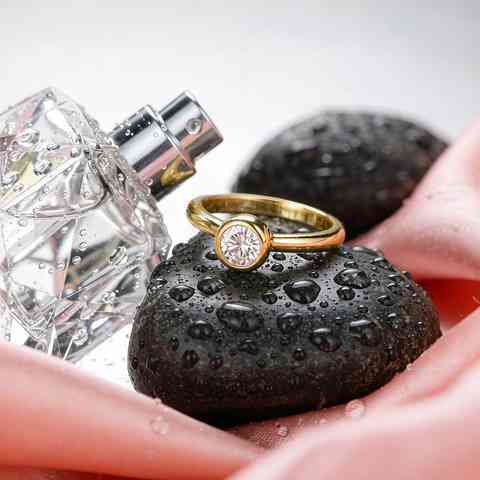
- Cosmetics and chemicals: perfume, hairspray, sunscreen, soap, sanitiser and chlorine soften the surface film and speed up the reaction at any exposed spot.
- Air and humidity: oxygen and moisture oxidise the base metal, and atmospheric sulfur darkens it further. Coastal, tropical and monsoon climates accelerate this sharply.
- Skin chemistry: acidic sweat and body salts leave a green-black trace on some wearers and dull the finish faster on the pieces they wear every day.
Tarnish needs an exposed or weakened spot to begin. A continuous, polished gold layer plus sensible wear and dry storage keeps the brass sealed and slows the process considerably. Hengdian (HD) Jewelry applies a measured 0.1-0.3 micron 18K gold layer over polished brass as our own production standard, and custom plating thickness is available on request for humid or high-turnover markets.
The problems customers actually report
A ring leaves a green mark on the finger
Sweat and cosmetic residue reacting with the copper in the base where plating is thinnest. Cleaning and drying the piece at night resolves it in nearly every case.
It dulled while sitting in a humid warehouse
This is storage, not wear. Moisture and airborne sulfur attack unworn stock, so sealed storage with a drying sachet protects inventory too.
It darkened after perfume was sprayed on it
Alcohol and fragrance concentrate on the surface and break down the coating. Applying perfume first and jewellery last prevents most of it.
The clasp edge went dark before anything else
That is a high-friction point, so the gold layer wears thin first. It is normal wear, not a defect.
Tarnish or worn plating? How to tell them apart
A dull brown or dark film that wipes off with a soft cloth is surface tarnish, and it is reversible. A patch showing a different metal colour, feeling rough, or refusing to clean up means the plating has worn through to the base metal, and re-plating is the professional fix. Knowing which one you are looking at stops a cleanable piece from being written off, and tells you when to ask your supplier for a thicker specification. Compare specs on our 18K gold plated wholesale range or read how we manufacture.
Quick answers
Browse the full FAQ list or contact our team for a plating recommendation.