
- Home
- About us
- Products
- Monthly Jewelry Design
- 18k Gold Plated Earrings
- 18k Gold Plated Jewelry Sets
- 18k Gold Plated Rings
- 18k Gold Plated Bracelets & Bangle
- 18k Gold Plated Pendant Necklaces
- 18k Gold Plated Pendants
- S925 Silver Earrings
- S925 Silver Necklace
- S925 Silver Ring
- S925 Silver Jewelry Set
- Custom Jewelry
- Mother's Day Jewelry
- Valentine's Day Jewelry
- Christmas Jewelry
- Religious Jewelry
- Faqs
- News
- Certificate
- Contact us
Why Does Gold Plated Jewelry Turn Black?
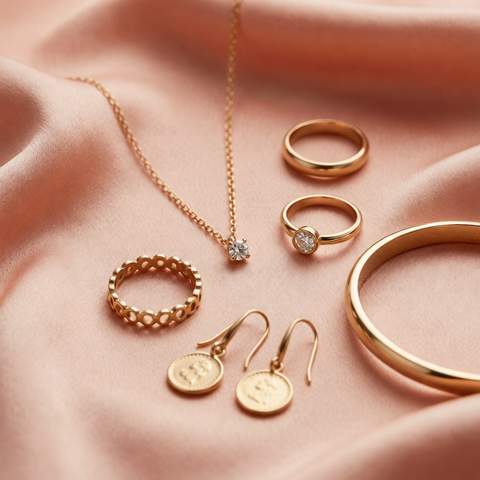
Why Does Gold Plated Jewelry Turn Black?
Gold plated jewelry can turn dark or black over time. This differs from fading: fading softens the gold tone, while blackening is oxidation of the metal underneath. Knowing the cause helps you advise customers.
What Causes the Black Color?
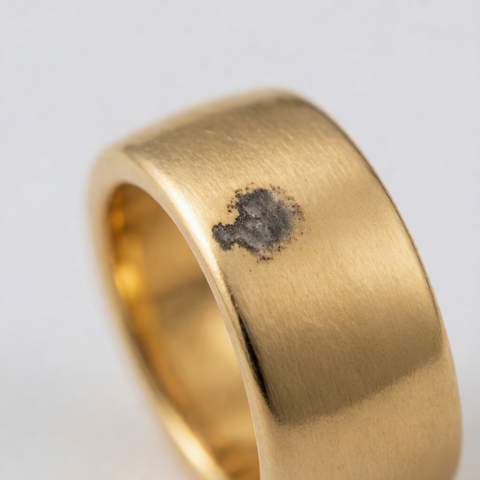
The metal under the plating is brass, an alloy of copper and zinc. Where the thin gold layer wears at friction points, exposed copper reacts with sulfur, moisture, and skin acids to form dark copper sulfide.
Where Does It Appear?
Mostly at contact points: inside ring bands, near clasps, behind earring posts, and spots that rub skin. These are where the plating thins first.
Common Triggers
- Sulfur - hot springs, eggs, latex, and some perfumes contain sulfur compounds that speed tarnish.
- Sweat and humidity - accelerate oxidation, especially in warm climates.
- Harsh chemicals - cleaners, chlorine, and acidic skincare break the plating faster.
How We Control Quality
At our Haifeng factory in Shanwei, Guangdong, we run fourteen production stages across five lines, and every piece passes a second check at our Guangzhou warehouse. Our standard 18K gold plating over polished brass is 0.1 to 0.3 micron. Products are lead-free with controlled nickel release within REACH limits. This is our own standard, not an industry figure.
How to Prevent Blackening
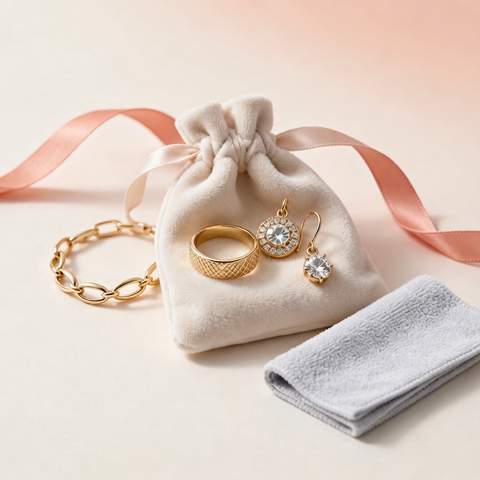
Remove jewelry before swimming, exercising, or applying cosmetics, and wipe with a soft cloth after each wear. Store in a dry pouch away from humidity. Custom plating thickness is available on request through our contact page.
We provide free samples (5 to 7 pieces, shipping prepaid by you). Browse 40,000+ ready-stock designs at our product list, with 500+ new styles added monthly. For bulk pricing and sample requests, send us an inquiry.
Frequently Asked Questions
- Is blackening the same as fading? No. Fading softens the gold tone as the layer thins; blackening is oxidation of exposed brass.
- Can blackened jewelry be cleaned? Light tarnish improves with a soft cloth; exposed base metal can be re-plated by a local jeweler.
- Does thicker plating help? Yes. A thicker layer delays base-metal exposure; custom thickness is available on request.
- What certifications do you hold? SGS audit, REACH, CE, and Gold Product Integrity Enterprise. See details on our about page.
Questions about plating durability or custom thickness?
Chat on WhatsApp